Unique Research Approach
Much of what I know about research, I first learned in the field. Over fifteen years of working in India’s most underserved communities, I picked up habits that formal training later gave structure to: asking questions carefully, designing around what people actually need, and staying long enough to see whether something worked. When I came to Cornell for my PhD, I brought those habits with me. The econometric and analytical training I gained here sharpened them into something more rigorous. My approach today sits at the meeting point of both: quantitative methods grounded in the realities of the communities I study, and fieldwork informed by the discipline of causal thinking.
Where It Began
Before Cornell, I spent nearly a decade in some of India’s most underserved regions. My first deep engagement with development work came as the Chief Administrative Officer at MAHAN Trust in Melghat, a tribal region in Maharashtra’s Amravati district where child mortality rates were among the highest in the country. Melghat is home to the Korku tribe, spread across hilly, forested terrain where roads wash out for months during the monsoon and the nearest functional hospital can be hours away. Government schemes existed, but their reach into these villages was uneven at best. Malnutrition was so common that families spoke of it as a fact of life rather than a crisis. The challenge was not just medical. It was infrastructural, cultural, and administrative, and any intervention that ignored that complexity was unlikely to last.
The work at MAHAN Trust was designed around that reality. We developed a home-based childcare program across 20 tribal villages, training community health workers to identify at-risk infants early, counsel mothers on feeding and care practices, and keep families connected to the health system between clinic visits. In parallel, I designed and implemented a medical counselor program in 15 government hospitals across Amravati, placing trained counselors at the point of care to bridge the gap between clinical services and the communities they were meant to serve.
Over three years, the infant mortality rate in those 20 villages dropped from 84 to 32 per 1,000 live births. The hospital counselor program demonstrated enough impact that the district administration requested its expansion to the district level. These were collective outcomes, the result of over 150 community workers, government partners, and families engaging with the process. But achieving them required something I had not fully appreciated before: the ability to build and hold together coalitions across institutions with very different incentives, timelines, and ways of working.
The Melghat years also taught me about the practical side of sustaining development work. I led fundraising efforts that brought in over ten million rupees (roughly US$125,000) through CSR foundations and crowdfunding to keep programs running, and used media advocacy to draw public attention to hunger and malnutrition in the region. None of this was research in the formal sense. But it built instincts I rely on to this day: how to enter a community without assumptions, how to design programs that survive contact with local realities, and how to hold yourself accountable to the people the work is meant to serve. When I eventually moved into academic research, these instincts became the foundation everything else was built on.
Building From the Ground Up
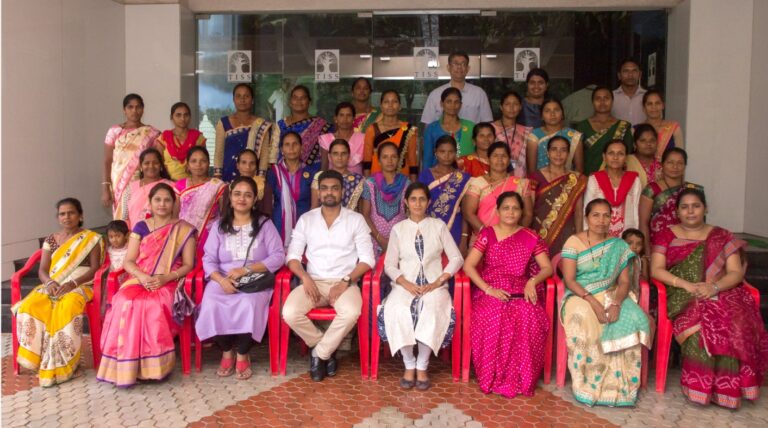
That conviction deepened when I joined the Tata-Cornell Institute and managed the SFurtI flour fortification program in South Gujarat. Tribal communities in Songadh block faced high rates of anemia and micronutrient deficiency, and the core idea was to fortify the wheat, rice, and jowar flour that households already consumed. Simple in concept, but the execution demanded constant adaptation.
We co-designed the distribution system with women’s Self-Help Groups, who became the backbone of the program. I built a Management Information System to track uptake, repeat use, stock flows, and cash movement across 15 villages in real time and ran behavior change campaigns adapted for low-literacy audiences through demonstrations, audiovisuals, and community events. When families told us the mixing process was too complicated, we simplified it. When male household heads resisted, we organized separate meetings to address their concerns. When remote hamlets were hard to reach, we partnered with anganwadi centers, churches, and dairy cooperatives to extend our presence.
Every course correction came from listening, and from data. The MIS flagged which villages were falling behind, which distributors needed support, and where non-compliance was clustering. Within eight months, over 70 percent of households were using the fortified flour. That combination of real-time monitoring and community responsiveness is something I have carried into every project since.
From the Field to the Dissertation
These years of ground-level work shaped the questions I brought to my PhD. I wanted to understand how India’s two largest income-support programs for rural households, the Mahatma Gandhi National Rural Employment Guarantee Act (MGNREGA) and gendered cash transfer schemes such as PM Kisan Samman Nidhi and Maharashtra’s Ladki Bahin, actually interact in practice. Are they substitutes? Complements? Does receiving cash transfers change whether and how women participate in public workfare? And what happens to dietary diversity, financial autonomy, and intra-household decision-making when both programs operate simultaneously?
Answering these questions required building evidence from multiple directions. On the primary data side, I designed and administered panel household surveys covering 800 rural households across multiple rounds using ODK and SurveyCTO, with careful attention to sampling, attrition, and seasonality. I hired, trained, and mentored a team of 20 field surveyors, and built the data quality protocols they worked with. Getting this kind of research off the ground also meant building relationships well beyond the survey team. I worked closely with agricultural officers, block development officers, district collectors, panchayat members, and village leaders, because without their cooperation, access to respondents and local administrative data would not have been possible.
On the secondary data side, I assembled and cleaned large-scale administrative datasets by scraping district and block-level records from India’s MGNREGS public data portal, covering employment days, wages, and program participation over time to construct panel datasets that complement my household surveys.
The econometric work brings these data sources together. My dissertation applies causal inference methods to estimate the impact of gendered cash transfers on women’s labor supply, dietary diversity, and financial outcomes, while separately examining how cash transfers and employment guarantee participation interact at the household level. Identification strategy, the credibility of the variation I use, and transparency about what the data can support are central to how I approach this work. The goal is analysis that holds up to scrutiny and produces findings that are useful for the policymakers and practitioners working with these programs.
The field experience feeds directly into the econometrics in ways that are easy to overlook. Understanding local labor markets, migration timing, harvest cycles, and the politics of program implementation helps me interpret results that might otherwise look puzzling in the data, and helps me design surveys that capture what actually matters in people’s lives.
From Rural Safety Nets to the Platform Economy
During the pretesting phase of my dissertation fieldwork, something unexpected came up. Several households mentioned that they were investing their cash transfer benefits in mobile phones and motorbikes so that a family member could migrate to the nearest town and find work as a gig delivery partner. The government’s income support was, in some cases, becoming a stepping stone into the platform economy.
According to India’s Economic Survey 2025-26, the gig workforce grew 55 percent between FY 2021 and FY 2025, reaching 12 million workers. NITI Aayog projects it will expand to 23.5 million by 2029-30, forming 6.7 percent of the non-agricultural workforce. Yet about 40 percent of these workers earn below Rs. 15,000 per month, and income volatility, thin credit access, and algorithmic control over work allocation remain largely unaddressed by policy. Understanding what draws workers into this economy, and what happens to them once they are in it, felt like a natural and necessary next step.
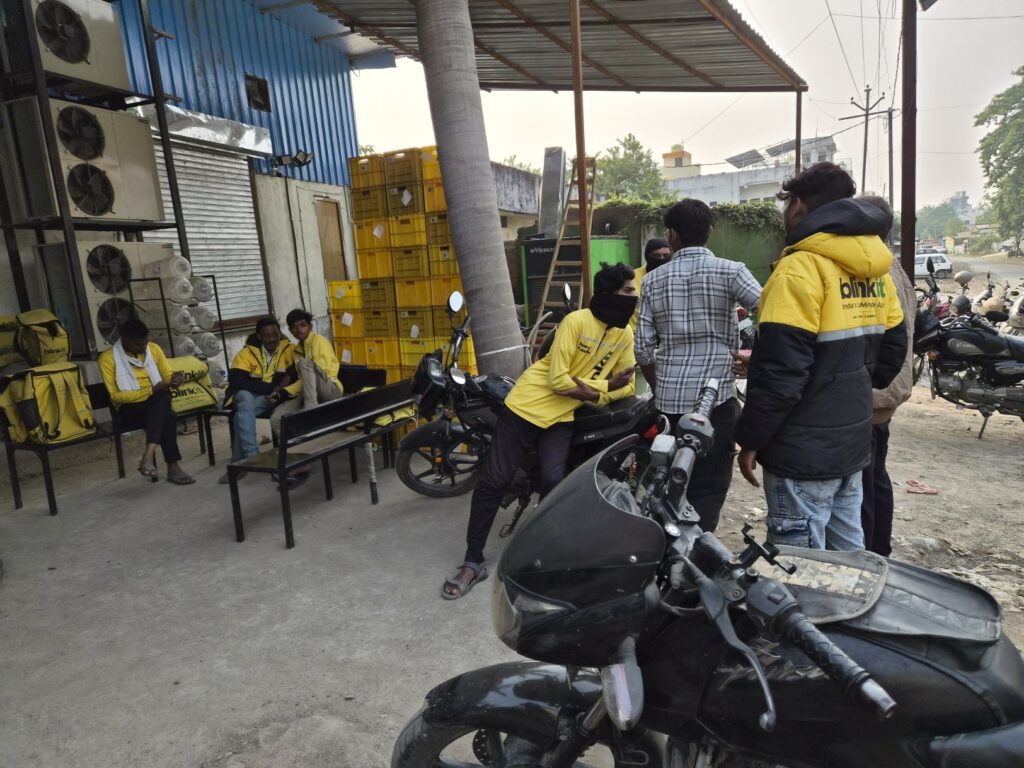
So I became a delivery rider. For two months, I worked as a food delivery partner in Indian cities, navigating algorithmic pay structures, heat advisories, and the daily uncertainty of earnings that shift by the hour. I stood in the same queues, felt the same frustrations, and did the same mental math that every gig worker does before deciding whether to accept an order.
That immersion became the foundation for a mixed-methods study. I conducted over 50 in-depth qualitative interviews with gig workers across multiple cities, using semi-structured protocols designed to surface experiences around earnings volatility, algorithmic control, occupational risk, and the gap between what platforms promise and what workers actually receive. The qualitative analysis drew on systematic coding and thematic analysis to identify how workers navigate precarity, make decisions about time and effort, and understand their own relationship with the platform. Alongside this, I am building survey-based quantitative evidence on labor market frictions and worker welfare in the gig sector.
The experience also opened a conversation beyond academia. I wrote about what I learned for The India Forum, Scroll.in, and The Global Indian Times, and discussed it on podcasts and in media interviews. That public engagement matters to me. Research on working conditions should be accessible to the workers, advocates, and policymakers who are in a position to change them.
This body of work is also the basis for my first book, Gigged: Lives on the Edge of the Platform (under contract).
This is the approach I keep returning to: get close enough to understand the texture of a problem before stepping back to measure it. The qualitative work does not just add color to the numbers. It shapes which numbers matter, what questions to ask, and how to interpret what the data show.
The Throughline
Each phase of this journey built on the last and opened the next. What connects them is not just the subject matter but an approach to research: design with communities, collect data carefully, apply rigorous methods, and make the findings travel beyond the academy. I work across primary and secondary data, panel econometrics and qualitative analysis, household surveys and web-scraped administrative records. I build and lead field teams, navigate institutional relationships from village panchayats to district administrations, and communicate findings to academic and public audiences alike. And through it all, I try to hold onto something simple: the best research comes from paying close attention to the people and places it is about.