SFurtI Program
Overview
The Sustainable Flour Fortification Initiative (SFurtI, meaning “Energy” in Gujarati) was a community-based, market-linked flour fortification program I managed from 2016 to 2018 under the Tata-Cornell Institute for Agriculture and Nutrition.
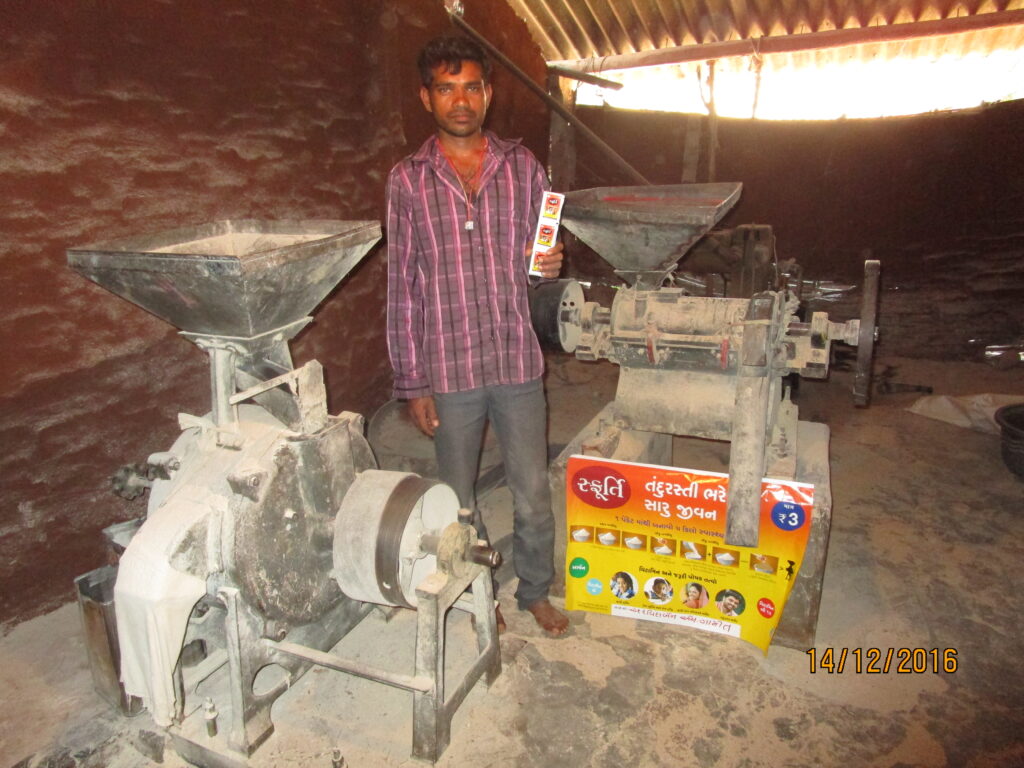
The program operated in 15 villages in Songadh block, Tapi district, Gujarat, reaching approximately 5,600 households with micronutrient sachets containing iron, folic acid, vitamin B12, and vitamin A. Each 1.25g sachet was designed for 5 kg of wheat, rice, or jowar flour.
SFurtI was a $200,000 multi-partner initiative. Partners included the State Government of Gujarat, BAIF (Bhartiya Agro Industries Foundation, India’s largest agricultural NGO), Maharaja Sayajirao University of Baroda, Sight and Life Foundation (Canada), and DSM (Dutch State Mines, Netherlands). Households received sachets through women’s Self-Help Groups, with a strong emphasis on community ownership, sustainability, and behavior change for regular consumption.
My responsibilities included end-to-end field management, partner coordination, community engagement, distribution system design, monitoring and evaluation through a custom Management Information System, communications strategy including a 12-piece IEC toolkit and multi-channel behavior change campaigns, and research.
Why fortification?
Tribal communities in Songadh experience high anemia and micronutrient gaps, alongside low and seasonal access to diverse diets, making fortification an effective, low-cost complement to dietary diversification and supplementation.
Evidence from India and other contexts supports wheat flour fortification’s cost-effectiveness and feasibility when designed around local consumption patterns and delivery systems.
Outcomes
These outcomes show how a community‑led fortification program increased use of micronutrients, empowered women, and created a practical model that can be scaled to other tribal areas.
01
Uptake and Consumption
Household coverage reached 70% within months, with 40% of consumers using regularly, alongside positive MSU clinical survey results and ongoing biomarker tracking and widely reported drops in lethargy and weakness.
02
Women’s Empowerment
SHG-led delivery achieved over 95% coverage within BAIF SHG households, while SFurtI Bens and Sakhis gained visibility and leadership, including Bens contesting panchayat elections.
03
Community-first Innovation:
A first-of-its-kind, community-based fortification model blended household and miller mixing, omnichannel outreach (churches, mandals, dairies, schools, Anganwadis, ASHAs), and an FSSAI-aligned sachet that does not change taste or color.
04
Scalability
With federation reach across the block and strong district administration backing—including the Collector’s public support—the program is positioned to expand to nearby villages and other tribal blocks.
Leadership & Recognition
Coalition leadership
Coordinated a multi-partner program involving government, university, NGO, and international partners, and secured District Collector endorsement to align health, administrative, and community systems for rapid implementation across 15 villages.
Training & capacity building
Created training modules and delivered classroom, refresher, and on-field trainings for team members, standardizing mixing, record-keeping, and outreach practices.
Promotional materials
Led design, field-testing, and finalization of a 12-piece IEC toolkit (posters, booklets, brochures, stickers), iterating visuals and translations with SHGs and partners for clarity and recall.
MIS design & monitoring
Designed and operationalized a program MIS capturing month-wise uptake, repeat use, stock, and cash flows; instituted village-level registers and monthly reviews to drive data-led course corrections.
Field monitoring
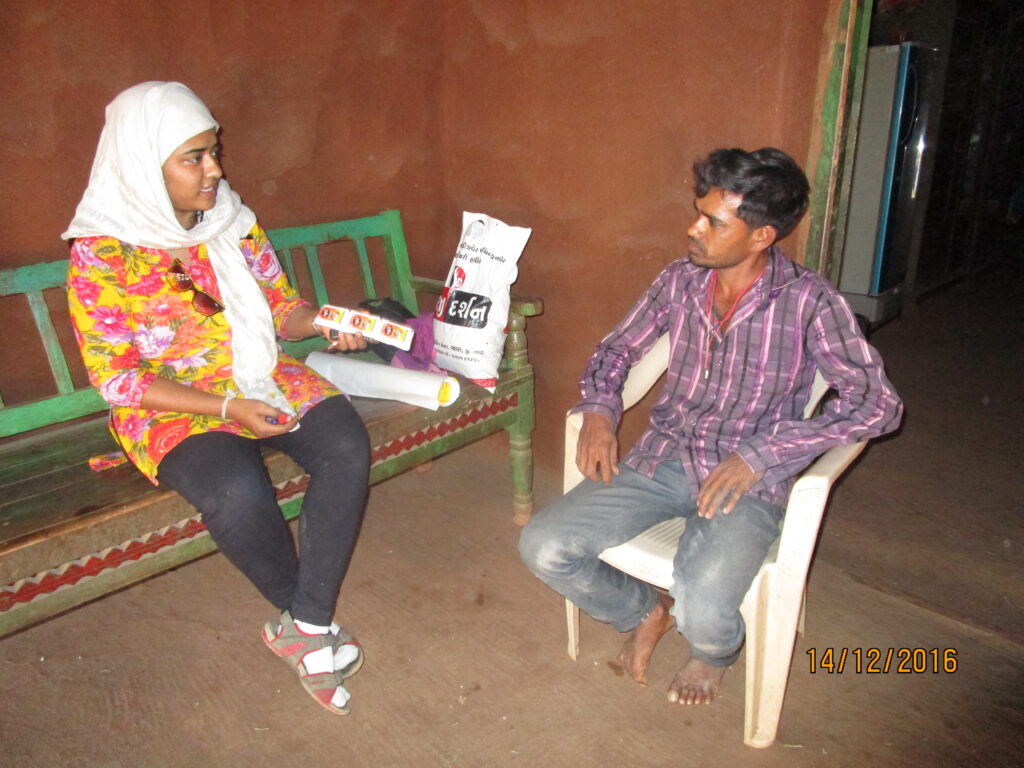
Conducted structured household visits, distributor reviews, and mixing demonstrations; analyzed non-compliance drivers and implemented micro-strategies (e.g., easier mixing, influencer outreach) to improve adherence.
Women-led delivery & recognition
Built a SHG-based distribution network achieving >95% coverage within BAIF SHG households and elevating women’s leadership, with Bens publicly recognized and contesting panchayat elections.
Scale readiness
Demonstrated government backing and federation reach, positioning the model for near-term expansion to additional villages and tribal blocks under Collector-supported scale-up.
Awareness and behavior change
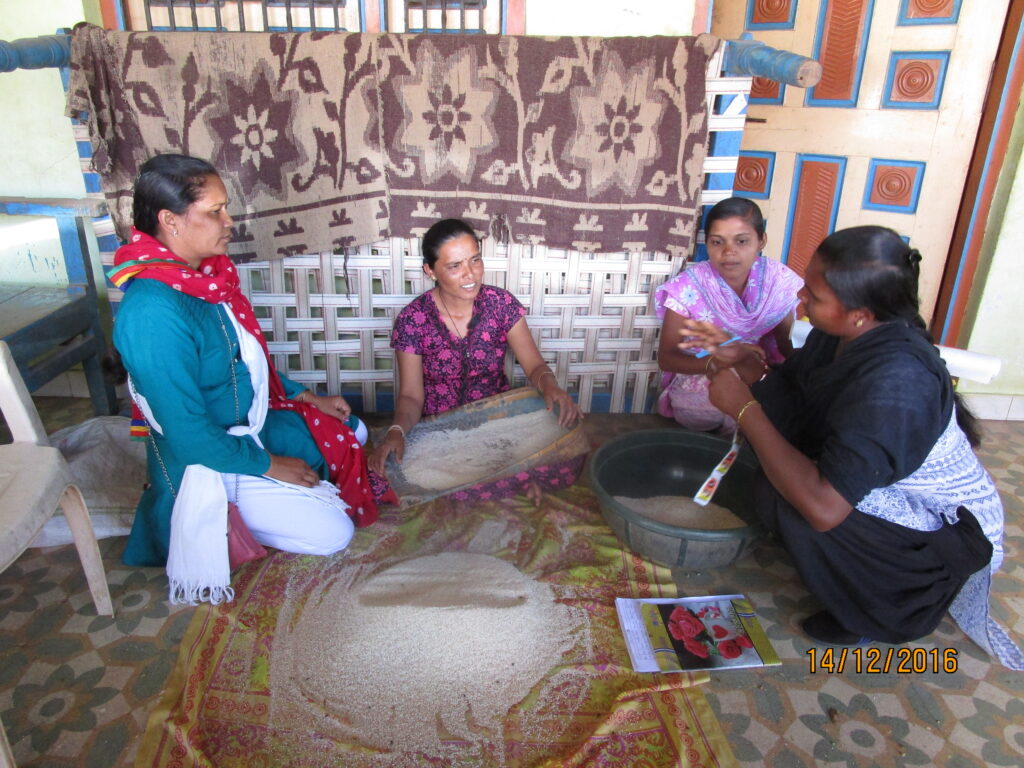
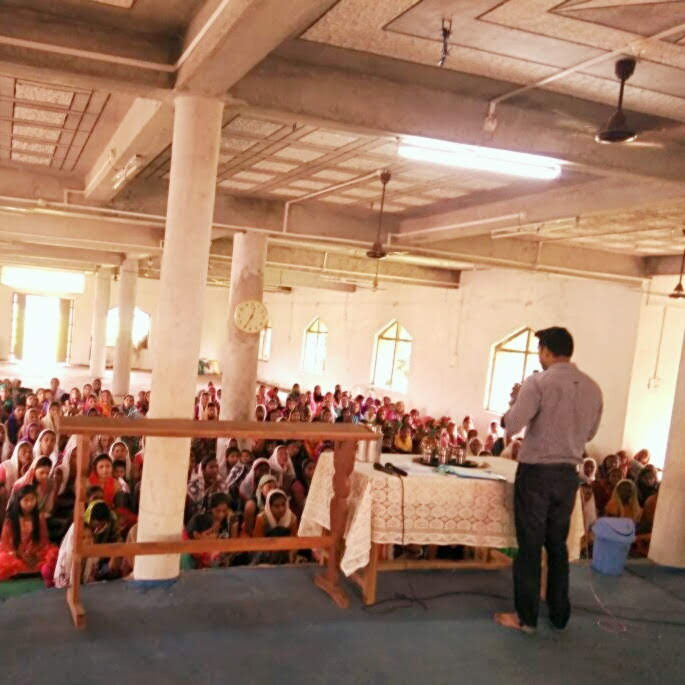
- Three-tier awareness model blended village meetings, hamlet/SHG meetings, and anganwadi sessions with mixing demonstrations, audiovisuals, wall painting, posters, and banners to maximize recall and comprehension for low-literacy audiences.
- Non-traditional channels like churches, Ganesh mandals, and Garba events were used to reach men and extended families, normalize conversations, and tackle household gatekeeping on food decisions.
- When households cited “mixing is complex,” the team simplified the protocol and launched a Buy–Eat–Repeat campaign with Anganwadi and ASHA support.
Field execution
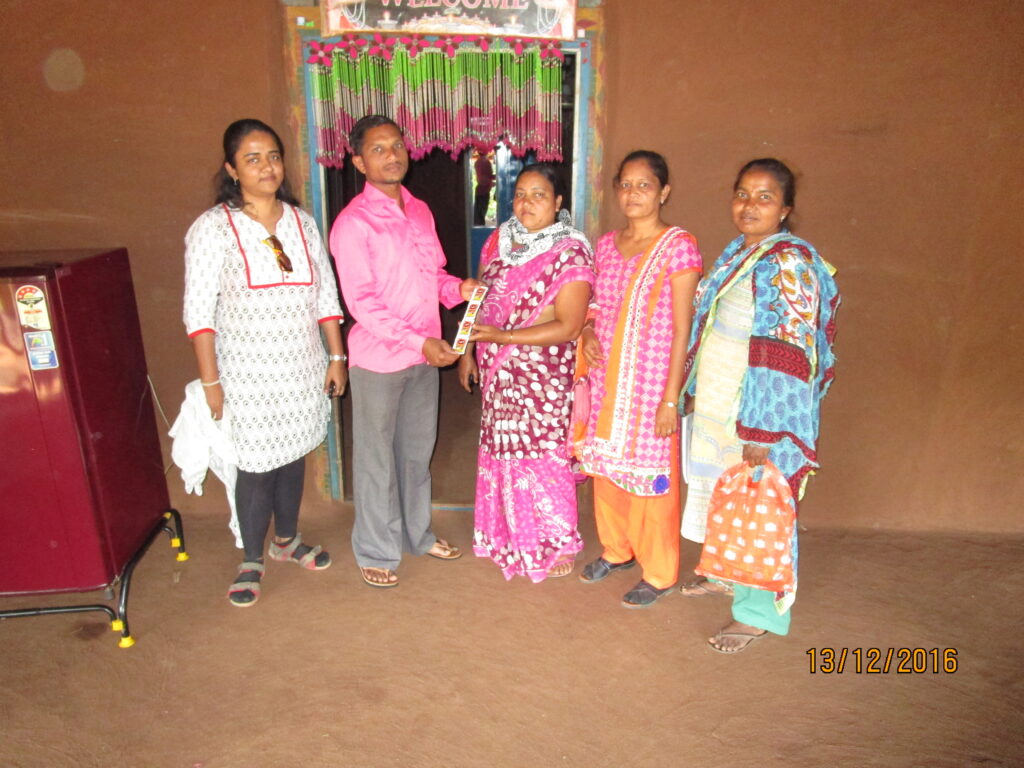
- SFurtI bens and sakhis recruited across villages, trained repeatedly in communication, recordkeeping, household follow-ups, and problem-solving for non-compliance.
- Household-visit campaigns organized with 10–15 member teams, with checklists, time-allocation discipline, inventory control, and daily debriefs for continuous improvement.
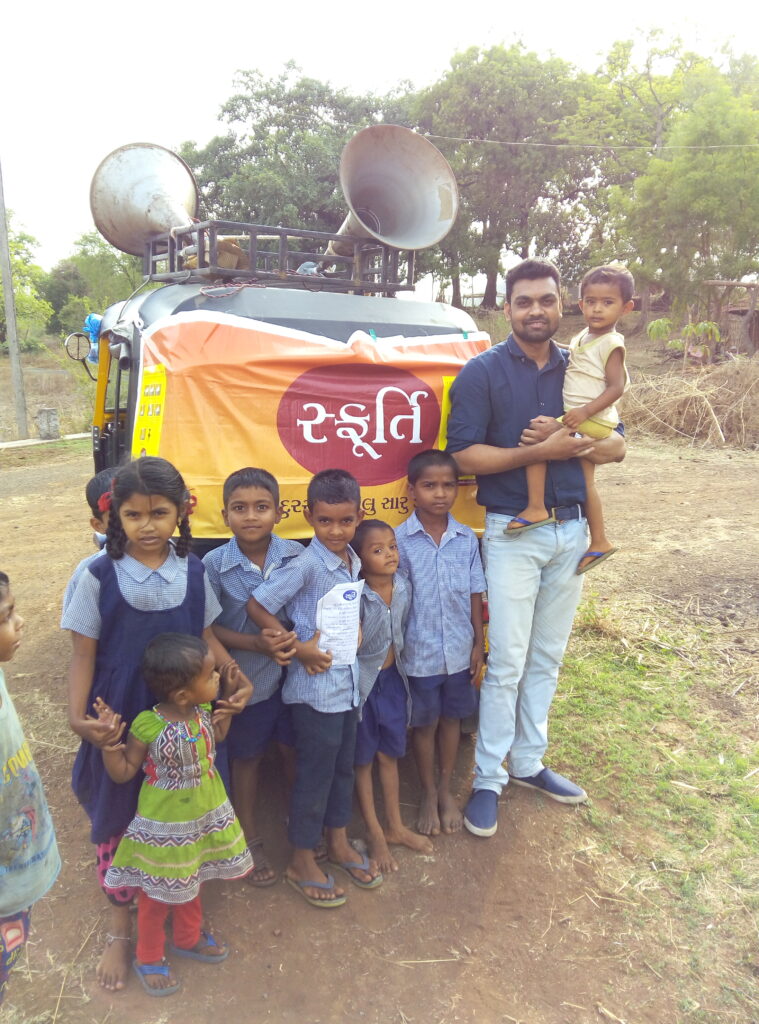
- Auto-campaigns and interactive audio–visual sessions staged across hamlets to refresh awareness between village meetings and sustain demand.
What was hard, and how we responded ?
Male household decision-makers initially blocked purchase and use, which required targeted male-only meetings to convert attitudes and unlock repeat consumption.
Mixing complexity reduced adherence; redesigning the mixing method and using demonstrations significantly improved ease-of-use and continuation.
Distance to far-flung hamlets lowered service frequency; buy-in from anganwadi centers, ASHAs, churches, and dairy cooperatives expanded last-mile contact and program visibility.
Millers’ participation fluctuated over time; keeping SHG-led distribution central while selectively integrating millers preserved control and community trust.
Community Opinion
Scalability and Relevance
The SFurtI model demonstrates that community-based flour fortification can achieve high and sustained uptake at low per-household cost when distribution is rooted in existing women’s networks and supported by real-time monitoring.
The approach is suited for semi-subsistence contexts where households mill grain locally, and it offers a practical complement to government-led fortification scale-up by demonstrating what community ownership and adaptive program design can achieve at the village level.
Partnerships with state health systems and safety net programs can mainstream fortified staples at scale, while SHG channels and village institutions maintain continuity for hard-to-reach hamlets and households not covered by formal programs. The program’s district administration backing and federation reach position it as a replicable model for other tribal blocks facing similar micronutrient challenges.