It was late, and Santosh was scrolling the app to see what the day had paid him, when he told me about the accident.
He had come off his bike once, on the job. He knew the platform insured him for exactly that. “Brother, I know they provide insurance but I have never used it, despite meeting with an accident once,” he said. “I don’t know how to use it. No one knows it. It’s so complex.”
He had recovered and gone back to riding. The insurance stayed where it always was, somewhere inside the app he opened forty times a day.
He is one of more than a crore Indians the apps now call partner.
If you have ordered dinner to your door or taken a cab from your phone, one of them brought it. Partner is a warm word, and it is the most important one in his working life, because of what it quietly does.
A partner is not an employee. And a worker who is not an employee has no employer, no one the law says must pay him a floor or give him a reason before his account goes dark.
India has spent a decade writing its gig workers into the law. It has spent the same decade avoiding the only question that decides anything. Is the platform their employer?
The Word the App Gives You
I know the word because the app gave it to me too.
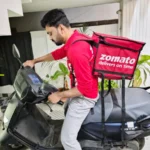
I had paid to be there. Four hundred rupees to sign up, two thousand more for the bag and the branded shirt, drawn from money I had not yet made. I gave them my Aadhaar and my bank details. They gave me a name and a set of lessons.
The lessons were careful about some things. How to greet a customer. How to hold the bag so nothing spilled. Be on time. Keep the rating high.
The other lessons never came. What to do when the app charged me for an order I had already delivered. Whom to call when an account went dark and no one would say why. The insurance did not begin until my third order. The first two rides were mine to survive alone.
The app trained me to be a good partner. It never mentioned that I was also a worker, or that a worker is owed anything.
Akash had spent ten years as an accountant before his firm let him go. He is on a quick commerce app now. “In my first job,” he told me, “my firm used to contribute to my provident fund. I had paid leaves, and comprehensive health insurance for my family. This gig hardly provides anything.”
Most workers I met never had those things to begin with. The gig economy did not take their protections away. It arrived where nothing had ever been, and it brought the word partner with it.
When the Screen Goes Dark
Of all the decisions the app makes without explaining, the heaviest is the one to switch a worker off altogether.
Shadab drives a rented cab in Delhi’s Sangam Vihar, two shifts a day. When two of his children fell ill, he borrowed money he is still repaying; seventy per cent of what he earns each month goes straight to the loan. His wife took up housekeeping shifts on a home services app to cover the rest. Between them, there is no cushion.
He found out about his deactivation the way most of them do.
“I got to know about my deactivation in the morning, when I was getting ready to go out with my cab and took out my phone to sign in,” he told me. There had been nothing the night before. The screen offered one line.
Your account has been deactivated. Please contact customer care for activation.
It did not say why. No one he reached could tell him. It took a full day to get the account back, a day spent on the phone instead of on the road.
The companies tell it differently. For example, Deepinder Goyal, founder of Zomato, a food delivery platform, said on a podcast in January 2026 that the platform removes approximately 5,000 delivery partners each month, almost always for repeated fraud, not at random, and that in 50 to 70 per cent of disputed cases, the company bears the loss itself.
That can be true and still not help Shadab. No one told him what he had done wrong. He could not defend himself, because there was nothing to defend against. The legal scholar Veena Dubal, who has spent years studying these systems, argues that the logic is hidden behind black box algorithms, and that companies use variable, unpredictable pay not despite the confusion it causes, but because of it.
A salaried worker cannot be let go like this, by a message on a screen. There is a process. A reason has to be given, and it can be questioned.
A gig worker can lose his only income overnight, by a decision no one will own. Nothing on the books says he is owed better.
A Name, Not a Shield
In 2020, for the first time, an Indian law wrote down what a gig worker is.
The Code on Social Security placed among its provisions a definition that had never existed before. A gig worker, it said, is a person who earns outside the traditional employer-employee relationship.
Read that again. The first words the law ever used to recognise these workers recognised them by what they are not. In the act of naming them, it wrote their exclusion into the statute. The contract had already done this with the word partner. The state now did it with a definition.
A Social Security Fund was set up. The government would build the schemes to pay out from it later, once the details were fixed. Through the years that followed, it fixed none. The fund sat in the statute and held nothing for anyone.
When I mentioned the new labour codes to Asif, a cab driver in Gurugram who had come to this work after everything steadier ran out, he had not heard of them. “Is it a new scheme for gig workers?” he asked.
To him it was new. Two years and more after it was written, nothing in it had ever found him.
The Women Who Went Inside
Seema cleans flats in the high-rises of Dwarka, in Delhi, for two housekeeping apps. The app sends her an address and tells her when she has arrived. After that she is on her own.
“These big buildings have many dark corners on the stairs,” she told me. “I particularly find it scary. You know how unsafe Delhi is.”
I asked if she knew what to do when she felt unsafe.
“I will scream and start running,” she said, and laughed.
I meant whether the platform had told her anything. It had. She was to be more careful and vigilant. I asked what that meant. She said she did not know.
India has a law meant for exactly this. The Sexual Harassment of Women at Workplace Act requires any workplace with more than ten employees to set up a committee to hear complaints. The platforms have their answer ready. To them she is a partner, not an employee, so the committee is not hers to use.
The protection the law promises stops at the word they have chosen for her.
Seema had a plan for the worst. She would scream, and she would run. The app would know exactly which building she was in. It would not send anyone.
The World Answered. India Didn't.
One question sits under all of it. Is the platform the worker’s employer? India spent a decade not answering it. Other countries did.
In February 2021, Britain’s Supreme Court ruled on a case that had crawled through its courts for five years. Uber had insisted its drivers were independent contractors, free to work when they liked. The judges found otherwise. Uber set the fares. It controlled the routes. It hid the passenger’s destination until the driver had accepted, so he could not refuse a bad trip. A company with that much control over a worker’s day, the court found unanimously, could not hide behind the label in its contract.
Within a month, Uber reclassified all 60,000 of its UK drivers and began paying them the minimum wage. Uber still runs in Britain. The gig economy did not end. A floor was put under it.
In California, the companies took a different route. When the state moved in 2019 to make platforms treat drivers as employees, Uber, Lyft and DoorDash took the question to voters instead, and spent more than two hundred million dollars to win it.
A company willing to spend two hundred million dollars to keep a single word off its workers is not saying the word is harmless. It is telling you, in its own currency, exactly what the word is worth.
Spain made delivery platforms treat their couriers as employees in 2021. The European Union extended the same logic in 2024 across a workforce of forty-three million, putting the burden on the company to prove a worker is not its employee. And in June 2026, the International Labour Organisation adopted the first binding global standard for platform work, by 406 votes to 8. It requires a written reason before an account is switched off, and a human to review that decision. It guarantees social security no matter what the contract calls the worker.
India had a seat at the table. When the vote came, it abstained.
Does a company that runs every part of a worker’s day owe him what an employer owes? The rest of the world has started to say yes. India, so far, has only said partner.
I met Santosh again near the end of my reporting. He had something to show me. He took out his phone and found a photograph of his insurance card. “Here, I found it,” he said. “This time I downloaded it onto my phone.” It was the cover the platform had given him, the one he had told me, when we first met, that he had never been able to use.
I showed him mine. I had ridden as a delivery partner once, and somewhere on my phone was a photograph of the same insurance, downloaded and never used.
Two men on a footpath, holding up two photographs of the insurance that neither of us had ever managed to use.